
Spunbond nonwoven fabric goes from plastic granules to finished rolls in one continuous line. Understanding the process helps buyers see why GSM, color and strength can be controlled so precisely.
1. Raw material: polypropylene granules
The main raw material is polypropylene (PP) in small granules. Color masterbatch and additives, such as UV stabilizer or hydrophilic agent, are mixed in at this stage when an order needs them.
2. Melting and extrusion
The granules are fed into an extruder, where heat and pressure melt them into a smooth molten polymer. The melt is filtered to remove impurities.
3. Spinning the filaments
The molten PP is pushed through a spinneret, a plate with thousands of tiny holes, to form continuous filaments. Cooling air solidifies them, and high-speed air stretches them to make them thin and strong.
4. Forming the web
The stretched filaments are laid down randomly on a moving conveyor belt, forming an even web. The speed of the belt and the amount of polymer decide the GSM of the fabric.
5. Thermal bonding
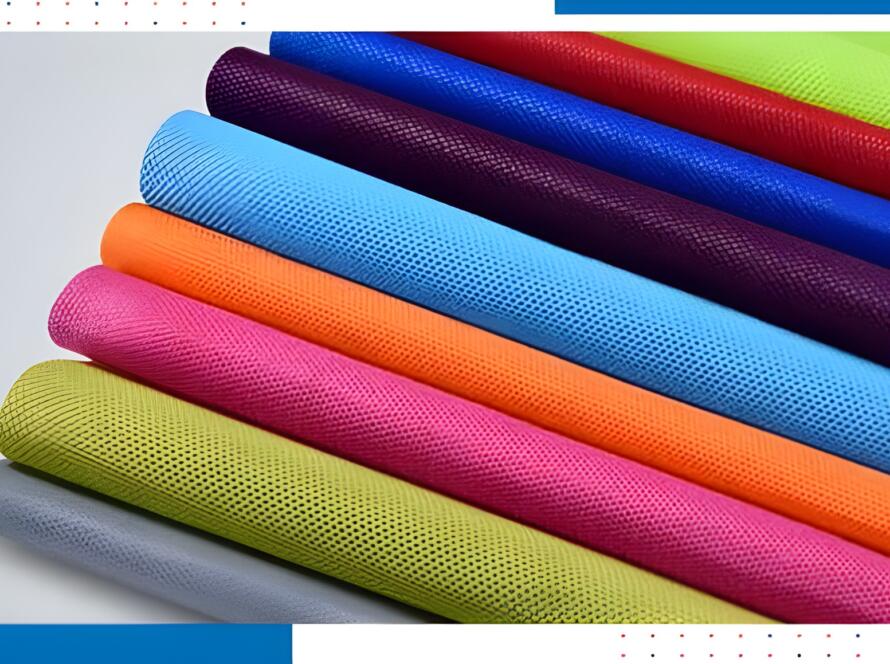
The web passes between heated calender rollers. One roller has a small dot pattern, which bonds the filaments together at many points. This gives spunbond fabric its typical dotted look, its strength and its softness.
6. Winding and slitting
The finished fabric is wound into large jumbo rolls, then slit into the widths and roll lengths customers order.
7. Quality checks
Throughout production, samples are checked for GSM, strength, color and appearance so every roll matches the order specification.
Why this process matters to buyers
- Continuous filaments make spunbond fabric strong for its weight.
- GSM can be set precisely, from very light to heavy fabric.
- Color and special properties can be added during production.
Learn more about choosing weights in our GSM guide, or compare fabric types in Spunbond vs Meltblown vs SMS.